
- EmergencyIn stock (43 units)£21.95
£24.95Unit price /Unavailable -
- Emergency
Twin Spot Non Maintained Wall Light | LED 4.5W 400lm | 4000K Neutral | IP65 | 3hr Emergency
In stock (48 units)£27.95£34.95Unit price /Unavailable -

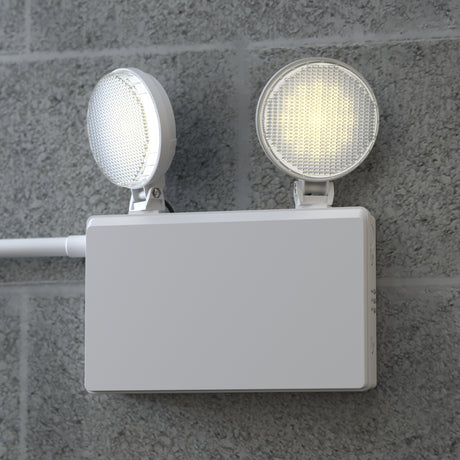


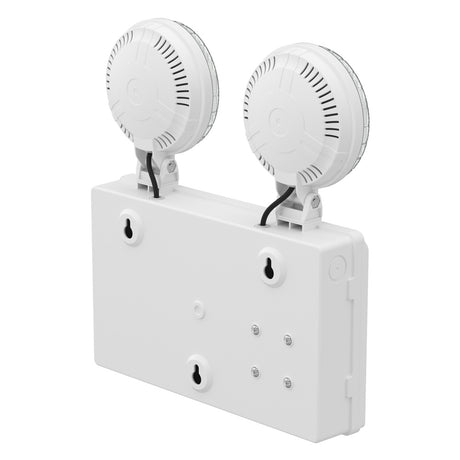


Twin spot emergency lights are a type of emergency light that provides illumination during power outages. These lights consist of two adjustable spotlight heads, mounted on a central housing unit, which can be directed to different areas as required.
Twin spot emergency lights are designed to provide high-intensity illumination, typically in industrial or commercial settings, to ensure the safety of personnel and facilitate the evacuation process in the event of an emergency. They are often used in warehouses, factories, sports arenas, general public areas. walkways and other large spaces where traditional lighting sources may be insufficient in emergency situations.
In addition to their high-intensity illumination, twin spot emergency lights typically are designed to be easily installed and maintained. They are also often equipped with features such as self test capabilities to ensure they function properly when needed.
Frequently Asked Questions
What are twin-spot emergency lights?
What are twin-spot emergency lights?
Twin-spot emergency lights have two lamp heads mounted on a central battery and control housing. They switch to emergency operation if the normal supply fails and are used where a wider or more directional spread of emergency light is required.
How does LED twin-spot emergency lighting work during a power cut?
How does LED twin-spot emergency lighting work during a power cut?
When the normal supply fails, the battery powers the LED heads for the fitting's rated emergency duration. Emergency lumen output is usually lower than normal-lighting output, so product photometric data, mounting height and the emergency-lighting design should determine positioning.
Why do emergency twin-spot lights have adjustable heads?
Why do emergency twin-spot lights have adjustable heads?
The two adjustable heads allow light to be aimed towards separate routes, open areas or safety points from one housing. They should be set during commissioning using the emergency-lighting design. Pointing both heads in the same direction may leave another required area without enough light.
Can IP65 LED twin-spot emergency lights be used outdoors?
Can IP65 LED twin-spot emergency lights be used outdoors?
An IP65 LED twin-spot emergency light may suit exposed or dusty locations when the manufacturer permits that use. Check temperature limits, mounting position, cable entries and the effect of weather on the complete installation. IP65 alone does not confirm that every outdoor location is suitable.
Do twin-spot emergency lights need testing and battery replacement?
Do twin-spot emergency lights need testing and battery replacement?
Yes. Twin-spot emergency lights need routine functional checks and periodic full-duration tests, with results recorded. Manual-test and self-test models report status differently. Batteries have a finite service life and should be replaced when testing shows that the rated duration is no longer achieved.
New arrivals ✨
View all-

Compact LED Driver Power Supply for LED Tape | 24V 100W | JB6 Junction Block
In stock (99 units)£64.95Unit price /Unavailable -

Compact LED Driver Power Supply for LED Tape | 24V 60W | JB6 Junction Block
In stock (64 units)£26.95Unit price /Unavailable -

Compact LED Driver Power Supply for LED Tape | 24V 30W | JB6 Junction Block
In stock (62 units)£19.95Unit price /Unavailable -

Compact LED Driver Power Supply for LED Tape | 24V 15W | JB6 Junction Block
In stock (451 units)£12.95Unit price /Unavailable -
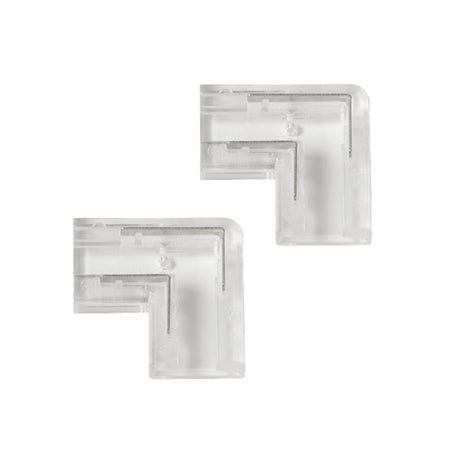
Corner Connector for 8mm LED COB Tape | Accessory
In stock (445 units)£1.95Unit price /Unavailable -

2m Power Input Lead for 8mm COB LED Tape Accessory
In stock (387 units)£3.95Unit price /Unavailable -
-
-
-


